Regional Arabic Style Guide
- Stakeholders
- Regional Market Teams · Product teams · Content Design · Marketing · Brand
- My role
- End-to-end ownership · Planning · Research · Writing · Editing · Maintenance
- Duration
- 6 months
- Tools
- Google Docs · Figma · Slack
Context
As talabat’s Content Design team grew, so did the need for a single source of truth for how we write across the product and beyond. As the team’s only Arabic content designer, I saw a growing need for dedicated Arabic guidance to keep our content consistent across markets and touchpoints.
Writers and teams regularly had to make decisions around terminology, translation, grammar, localization and formatting, often without documented guidance to refer back to.
I set out to create a regional Arabic style guide that would establish clear standards, reduce inconsistencies and make everyday content decisions easier across markets and teams.
The challenge
Arabic localization isn’t simply about translating English copy.
The same content needs to account for readability, regional language differences, right-to-left experiences, established terminology and Arabic-specific writing conventions — while still maintaining a consistent product voice.
The challenge was to create guidance that was specific enough to create consistency, but flexible enough to work across different Arabic-speaking markets.
My approach
I started by identifying the recurring questions and inconsistencies that came up while writing and reviewing Arabic product content.
From there, I researched Arabic language conventions, reviewed existing product patterns and documented decisions that could be turned into reusable guidance.
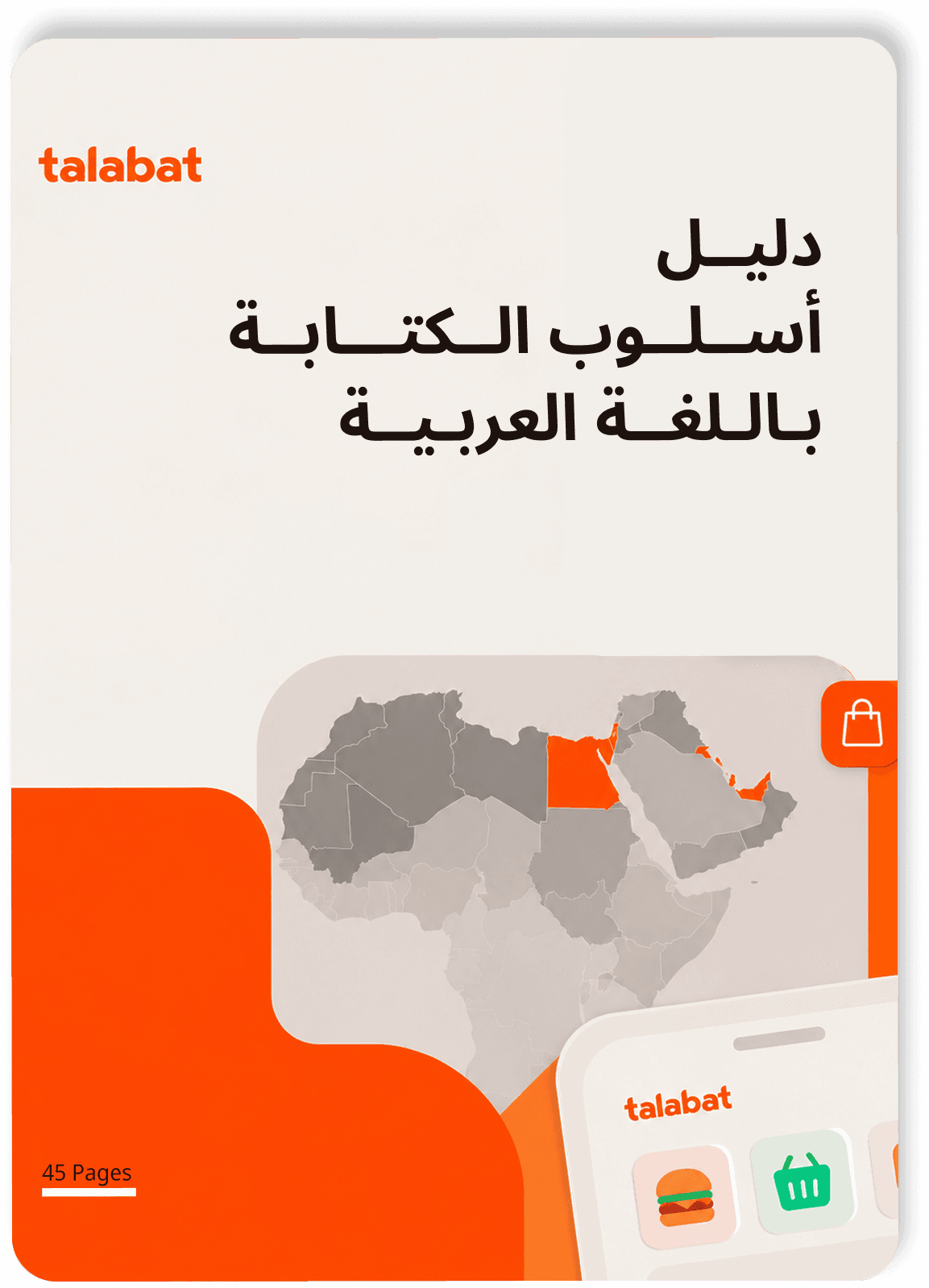
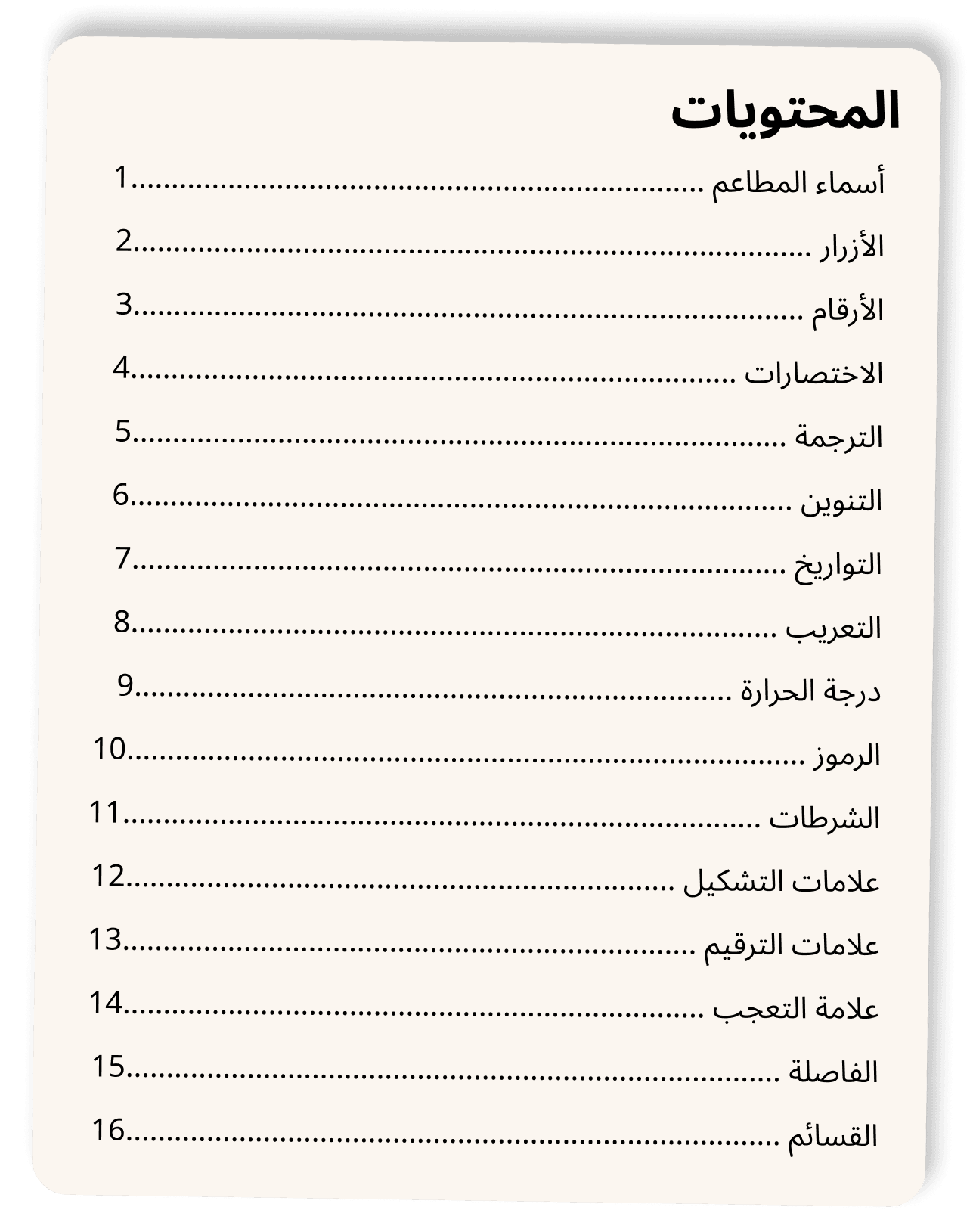
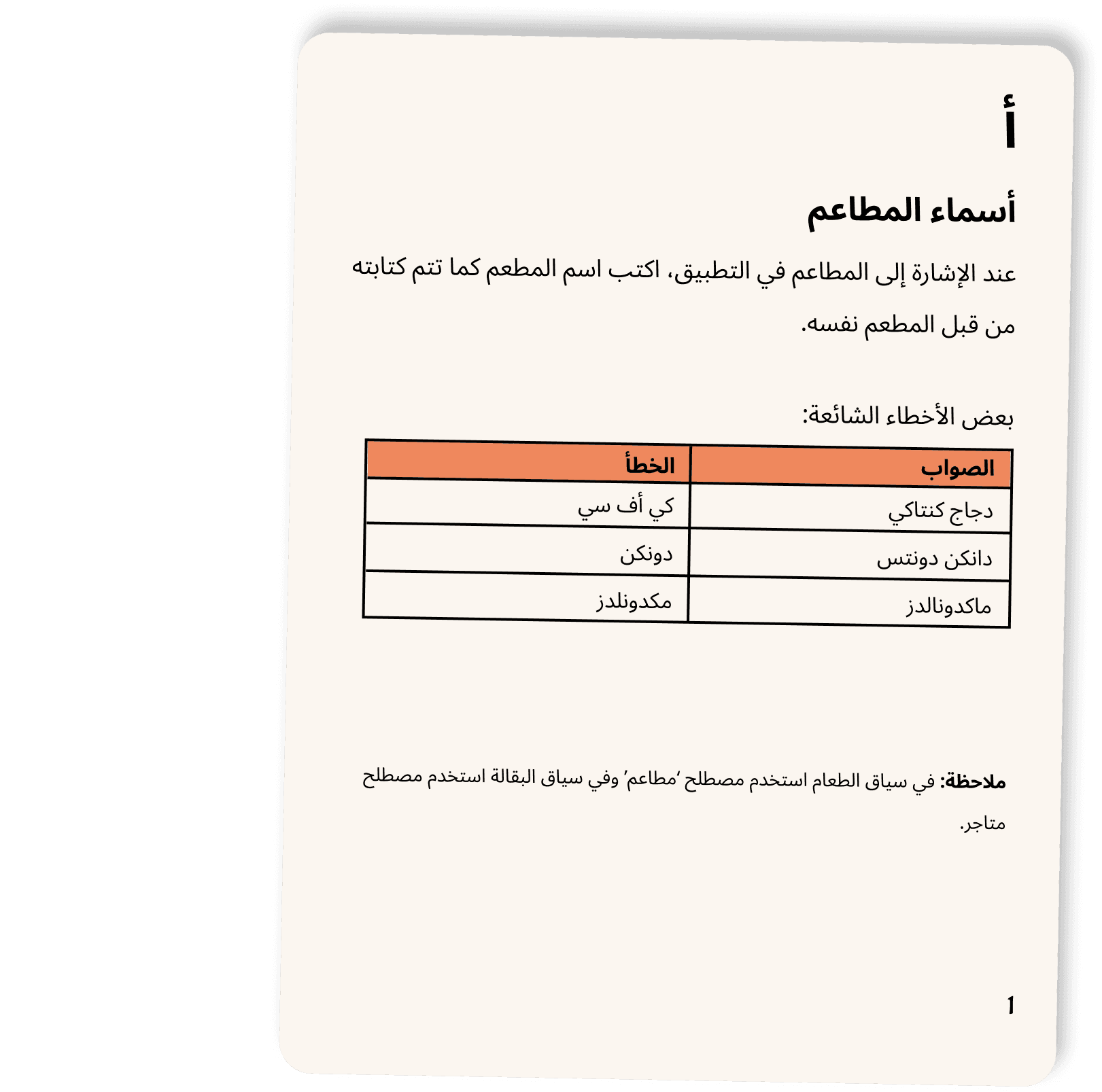
The guide grew into a 45-page resource covering everything from translation and localization principles to numbers, dates, currencies, brand names, punctuation, RTL considerations and product-specific terminology.
- Planned and structured the guide from the ground up
- Researched Arabic style guides, localization and formatting conventions
- Wrote and edited the guidance, examples and recommendations
- Documented recurring product and terminology decisions
- Maintained the guide as a living resource as new questions and patterns emerged
A guide built for real product decisions
Rather than focusing only on grammar, I designed the guide around the decisions teams actually encounter when creating Arabic experiences.
It included guidance on translation, localization, RTL interfaces, terminology, numbers, currencies, dates, brand names, punctuation, measurements and product-specific content.
For example, the localization guidance went beyond translated copy to cover considerations such as mirrored directional elements, text expansion and designing appropriately for right-to-left interfaces.
Impact
- Became a reference for Arabic writers and localizers
- Helped resolve recurring terminology questions
- Reduced back-and-forth with market teams
- Supported onboarding
- Gave teams one place to check established conventions
- Used across eight markets
- Informed later Arabic localization work